
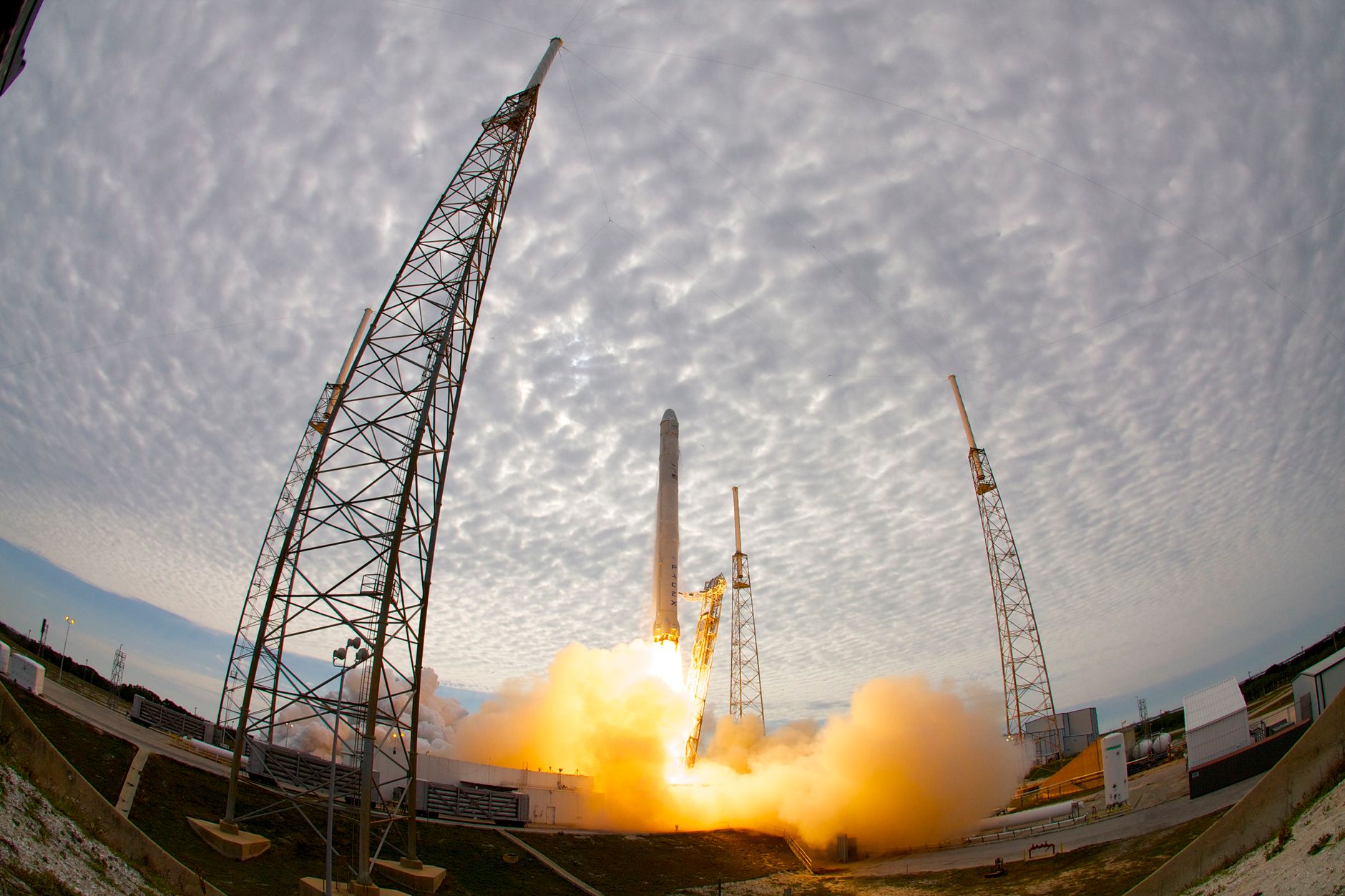
ISRO heavy satellite launch has successfully taken place with the EOS-05 mission, marking a significant milestone for India’s space program. The launch demonstrates India’s growing capabilities in satellite technology and space exploration.
ISRO’s Latest Achievement
The Indian Space Research Organisation (ISRO) has achieved another milestone with the successful launch of EOS-05, marking a significant moment in the realm of heavy satellite launches. This mission not only showcases ISRO’s capability to handle complex satellite deployments but also emphasizes India’s growing prowess in space technology.
EOS-05, recognized as India’s heaviest satellite, is designed to enhance the country’s earth observation capabilities. This satellite is equipped with advanced imaging technology, enabling it to capture detailed images of the Earth’s surface. The data collected will support various applications, including agriculture, forestry, and disaster management.
ISRO’s heavy satellite launch was executed using the Polar Satellite Launch Vehicle (PSLV), demonstrating the reliability and efficiency of this launch vehicle. The successful deployment of EOS-05 is a testament to ISRO’s commitment to innovation and excellence in space exploration.
With this achievement, ISRO continues to strengthen its position on the global stage, inspiring confidence in its ability to undertake future challenges and missions.
Details of the EOS-05 Mission
On November 7, 2023, ISRO marked a significant milestone with the successful launch of the EOS-05 satellite, which is recognized as India’s heaviest satellite to date. This mission not only demonstrates ISRO’s growing capabilities in space technology, but it also emphasizes the importance of heavy satellite launches for various applications.
The EOS-05 satellite is equipped with advanced imaging technology, allowing for high-resolution Earth observation. This capability is vital for sectors such as agriculture, forestry, and disaster management, providing essential data for informed decision-making.
The launch took place from the Satish Dhawan Space Centre, utilizing the GSLV Mk III rocket. This vehicle has become a cornerstone of ISRO’s heavy satellite launch program, showcasing its reliability and efficiency in delivering payloads into orbit.
In addition to its technical achievements, the EOS-05 mission is expected to strengthen India’s position in the global satellite market, contributing significantly to the nation’s space exploration goals.
As ISRO continues to push the boundaries of space technology, the success of the EOS-05 mission stands as a testament to India’s growing prowess in heavy satellite launches.
Impact on India’s Space Program
The successful launch of the EOS-05 marks a significant milestone in India’s space program, showcasing ISRO’s capabilities in executing heavy satellite launches. This achievement not only demonstrates India’s growing prowess in space technology but also enhances its status as a key player in the global space industry.
With the EOS-05, ISRO has reaffirmed its commitment to advancing satellite technology, which plays a critical role in various sectors such as agriculture, urban planning, and disaster management. The heavy satellite launch capabilities will enable the organization to deploy more sophisticated satellites that can provide high-resolution imagery and data.
The implications of this success extend beyond immediate technological advancements. ISRO’s heavy satellite launch capabilities are expected to attract international collaborations, fostering partnerships that can lead to shared knowledge and resources. Moreover, this achievement is likely to inspire future investments in India’s space initiatives, further propelling the nation towards a forefront position in space exploration and research.
In summary, the impact of the EOS-05 launch on India’s space program is profound, paving the way for greater innovations and advancements in satellite technology.
Future of Satellite Technology in India
The successful launch of EOS-05 marks a significant milestone in the evolution of satellite technology in India. ISRO’s heavy satellite launch capabilities are now more robust than ever, paving the way for advanced applications and research.
As India continues to enhance its position in the global space arena, several key areas are likely to benefit from this technological advancement:
- Remote Sensing: Enhanced imaging and data collection will improve agricultural monitoring, disaster management, and urban planning.
- Telecommunications: Increased satellite capacity will lead to better connectivity, particularly in remote areas.
- Scientific Research: The ability to deploy heavier payloads will enable more sophisticated scientific instruments to be launched into orbit.
- International Collaboration: Countries may seek partnerships with ISRO to leverage India’s growing expertise in heavy satellite launches.
Ultimately, the ongoing advancements in satellite technology will not only bolster India’s capabilities but also contribute to global knowledge and innovation in space exploration.
The recent ISRO heavy satellite launch has showcased the organization’s ability to meet complex challenges in space technology. With the successful deployment of EOS-05, the ISRO heavy satellite launch further solidifies India’s position in the global space race.
Photo by SpaceX on Pexels